— COLUMN / Pairing
IWA5 × Oryouri Eigetsu — A Night of Assemblage
A record of the second Maker's Dinner: IWA5 by Shiraiwa Shuzo (Toyama) paired with the cuisine of Oryouri Eigetsu, Hongo-sanchome — seven courses, five assemblages, one extraordinary evening.
2026年3月14日
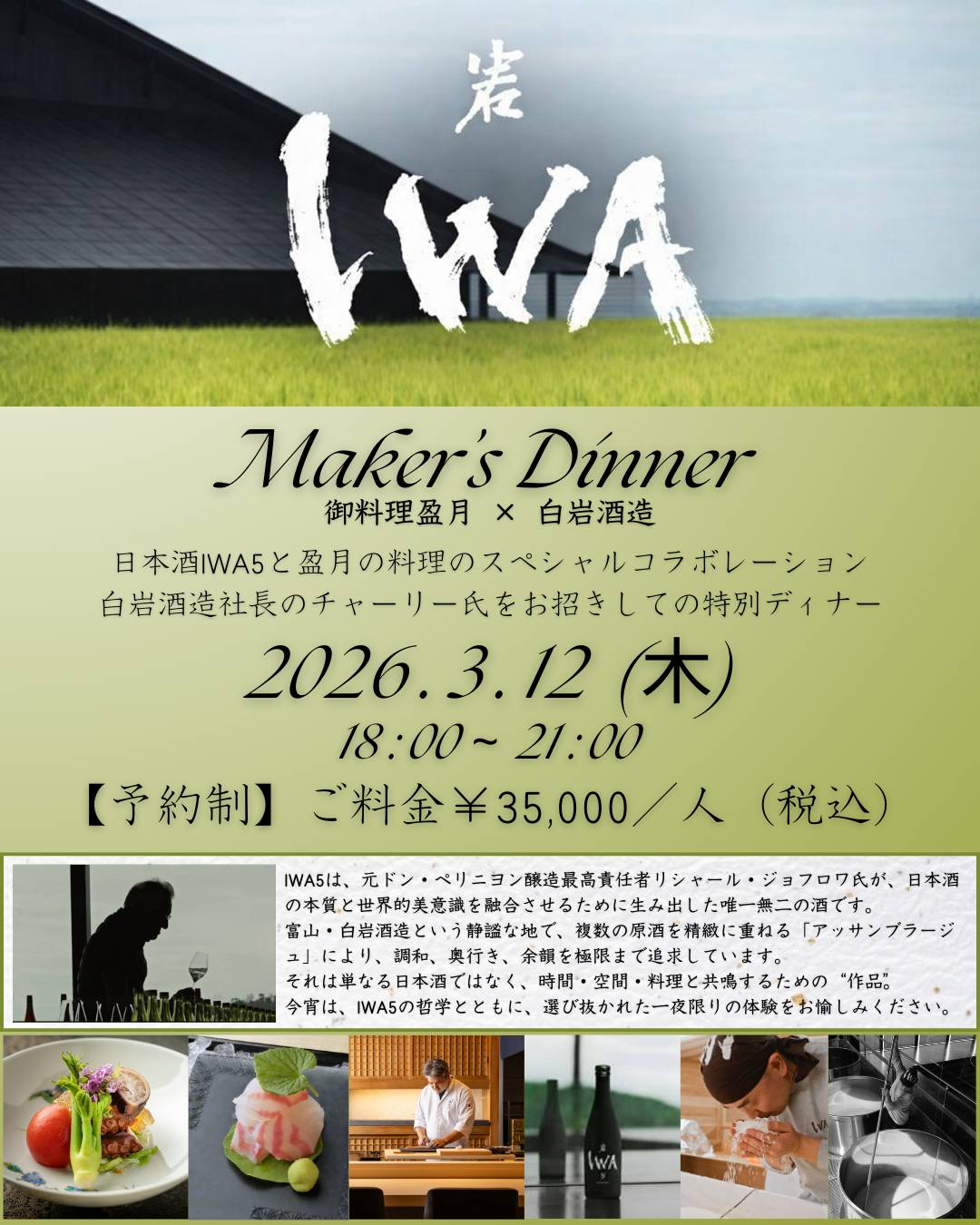
Thursday, March 12, 2026, 6 p.m. The noren curtain of Oryouri Eigetsu in Hongo-sanchome, Tokyo. This evening marked the second “Maker’s Dinner” — IWA5 from Toyama’s Shiraiwa Shuzo meeting the cuisine of Eigetsu in a collaboration designed around the concept of assemblage.
IWA5 is the sake created by Richard Geoffroy — former Chef de Cave of Dom Pérignon — to fuse the essence of Japanese sake with a global aesthetic. At Shiraiwa Shuzo in the quiet of Toyama, multiple base sakes are precisely layered through “assemblage” to pursue harmony, depth, and lingering finish in a single bottle.
This evening, Shiraiwa Shuzo’s president Charlie took time to speak about each assemblage in turn, while Eigetsu’s proprietress explained the ingredients and preparation of each dish. Listening to the creators of both sake and food describe their intentions — simultaneously — was a luxury that made every course more legible.
Five assemblages were served: Assemblage 6, Assemblage 4, Assemblage 2 (at two temperatures), Assemblage Reserves, and Assemblage 3. On arrival, a placemat printed with each assemblage number made the pairing structure visible before a word was spoken — a level of design intelligence that announced, quietly, what kind of evening this would be.
Second Maker’s Dinner — IWA × Eigetsu — Complete Record
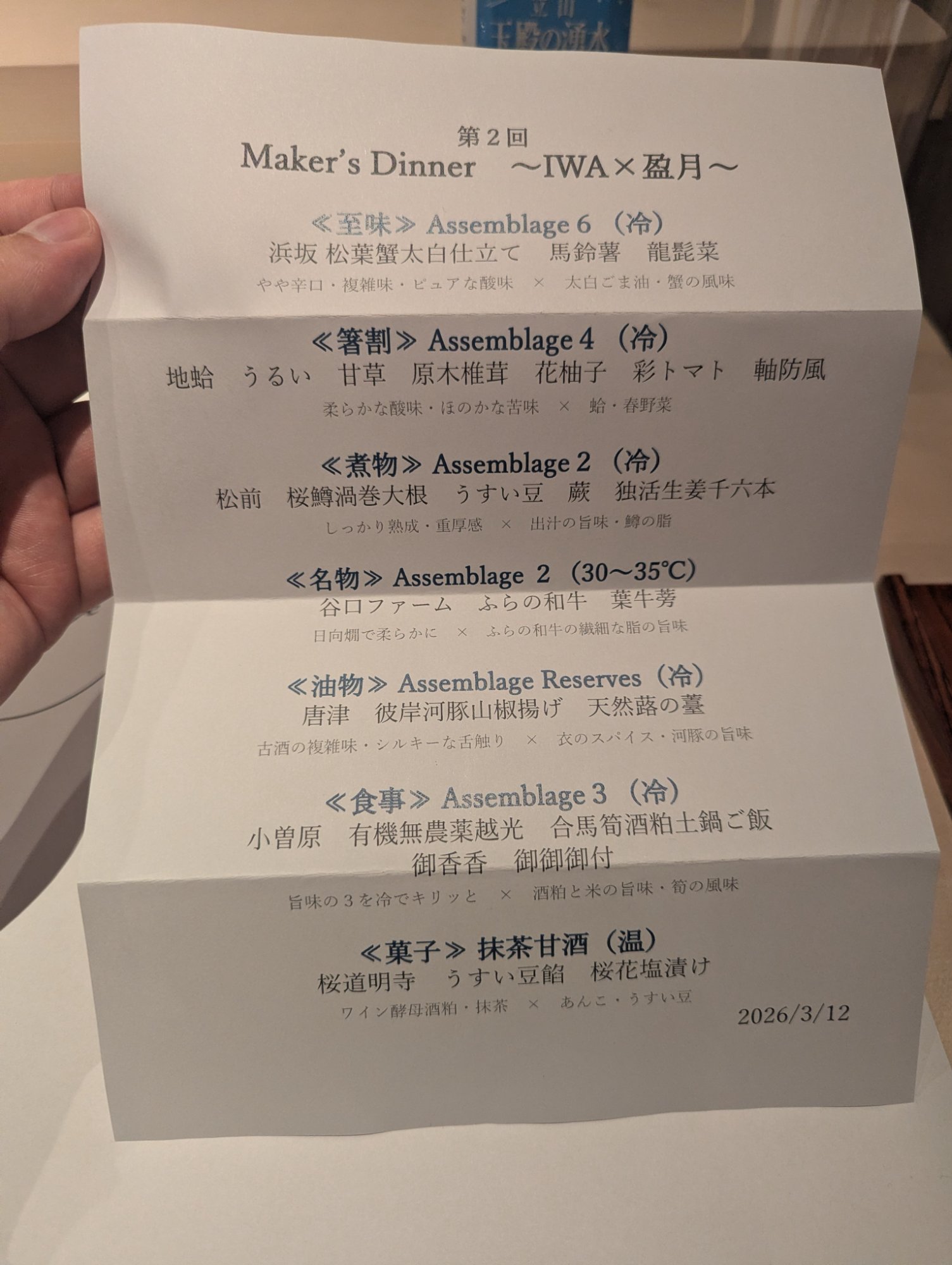
≪Shimi≫ Assemblage 6 (cold)
Hamasaka snow crab, taihaku sesame oil dressing — potato — asparagus
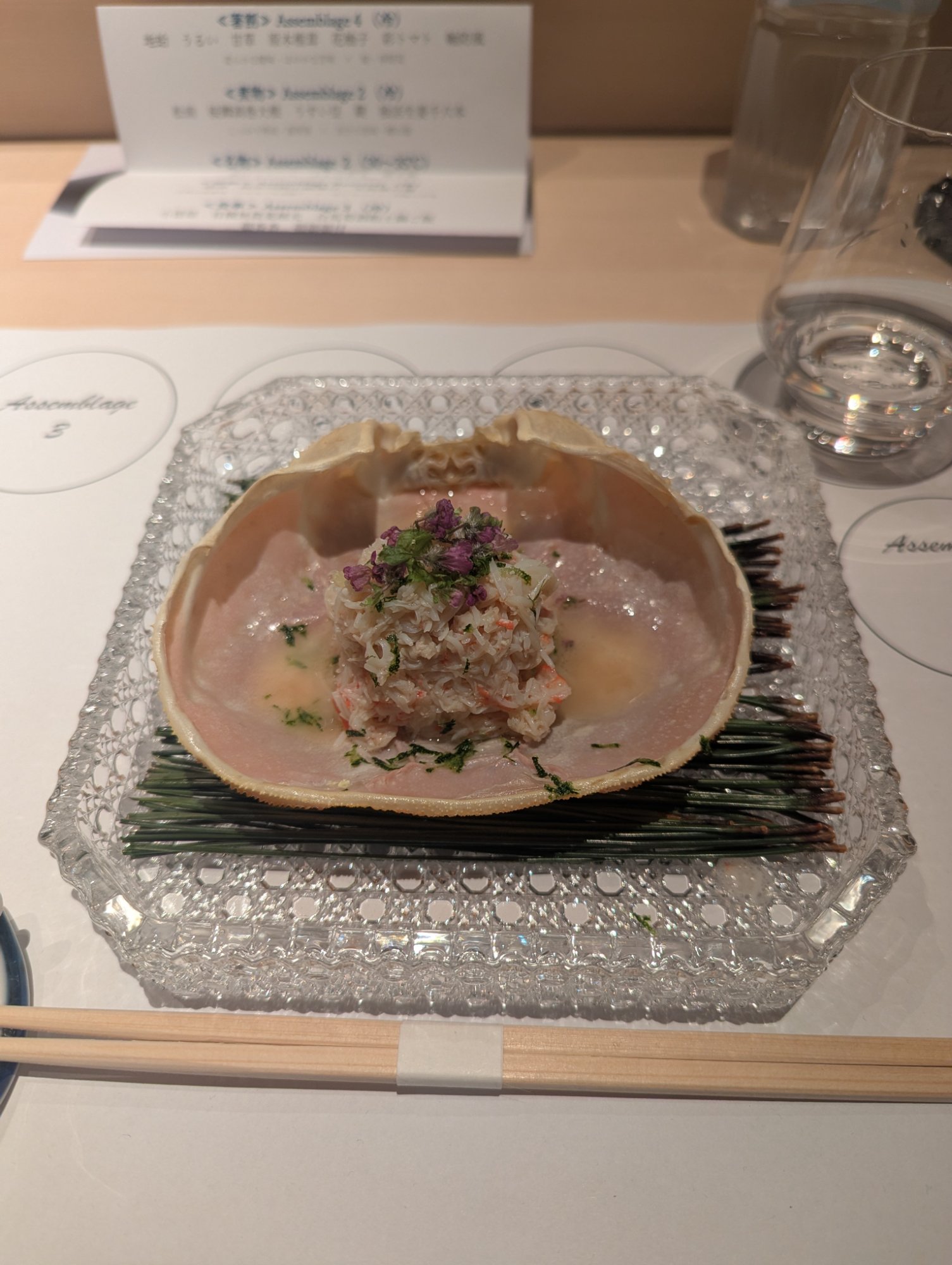
The shell of the snow crab serves as its own vessel. Hamasaka crab dressed with taihaku (sesame oil extracted without roasting) — the sweetness of the crab enhanced with minimal intervention. Asparagus adds green freshness; the flower garnish announces spring.
Assemblage 6 (cold) is “slightly dry, complex, pure acidity.” That acidity moves alongside the taihaku’s richness and the crab’s delicate sweetness, the assemblage’s depth slowly amplifying the crab without overtaking it.
≪Hashiwari≫ Assemblage 4 (cold)
Hamaguri clam — urui — licorice root — cultivated shiitake — yuzu flower — colorful tomato — mizuna
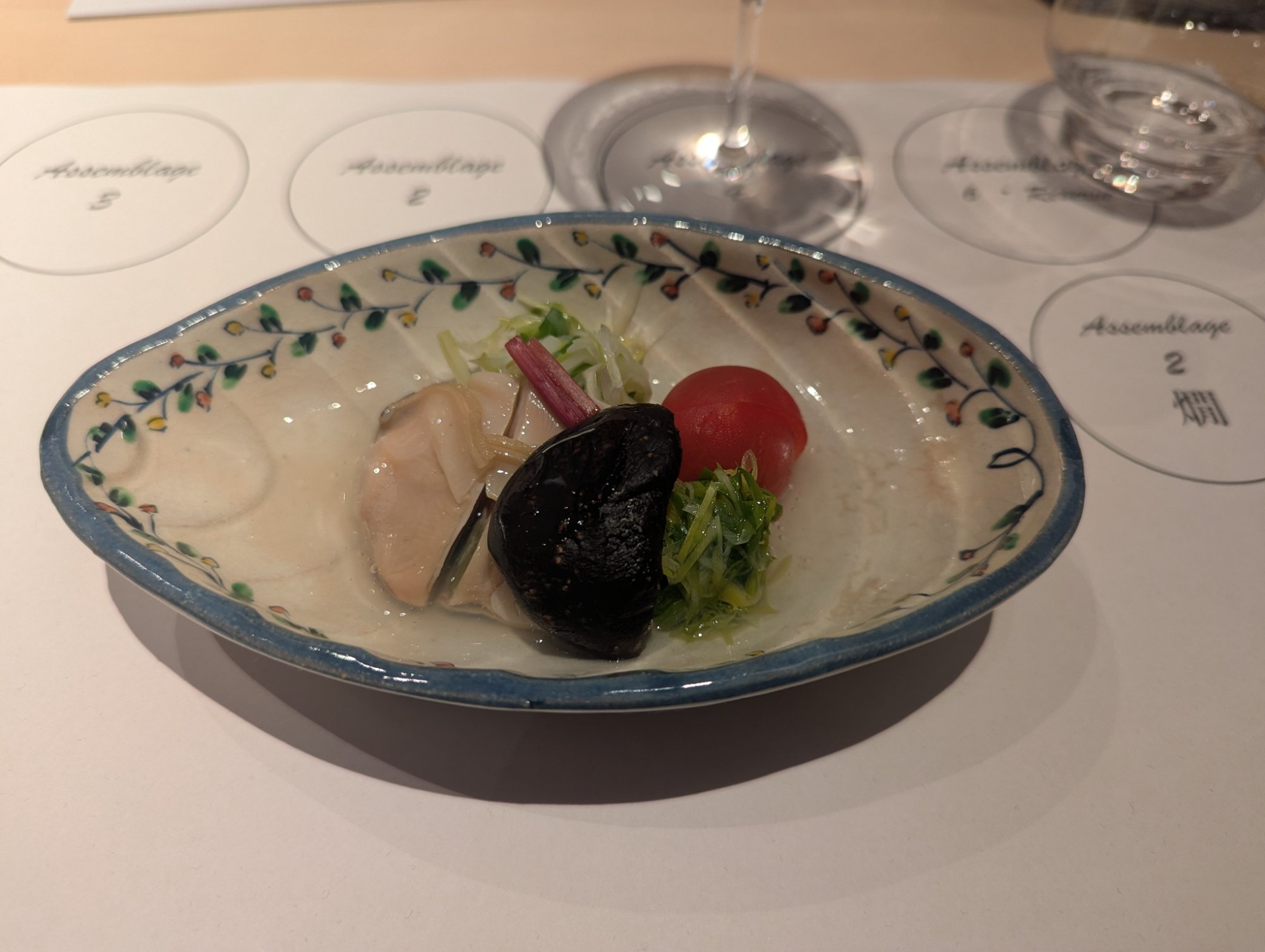
A gathering of spring’s first abundance. The hamaguri clam anchors the composition; urui, licorice root, shiitake, colorful tomato, yuzu flower, and mizuna bring bitterness, sweetness, and acid from the surrounding fields.
Assemblage 4’s profile — “soft acidity, hint of bitterness” — serves as a bridge between the clam’s briny depth and the gentle bitterness of the spring vegetables. The bitterness transforms, through the sake’s mediation, into something that reads unmistakably as umami.
≪Nimono≫ Assemblage 2 (cold)
Matsumae — cherry trout, daikon spiral — snap peas — bracken — udo with ginger
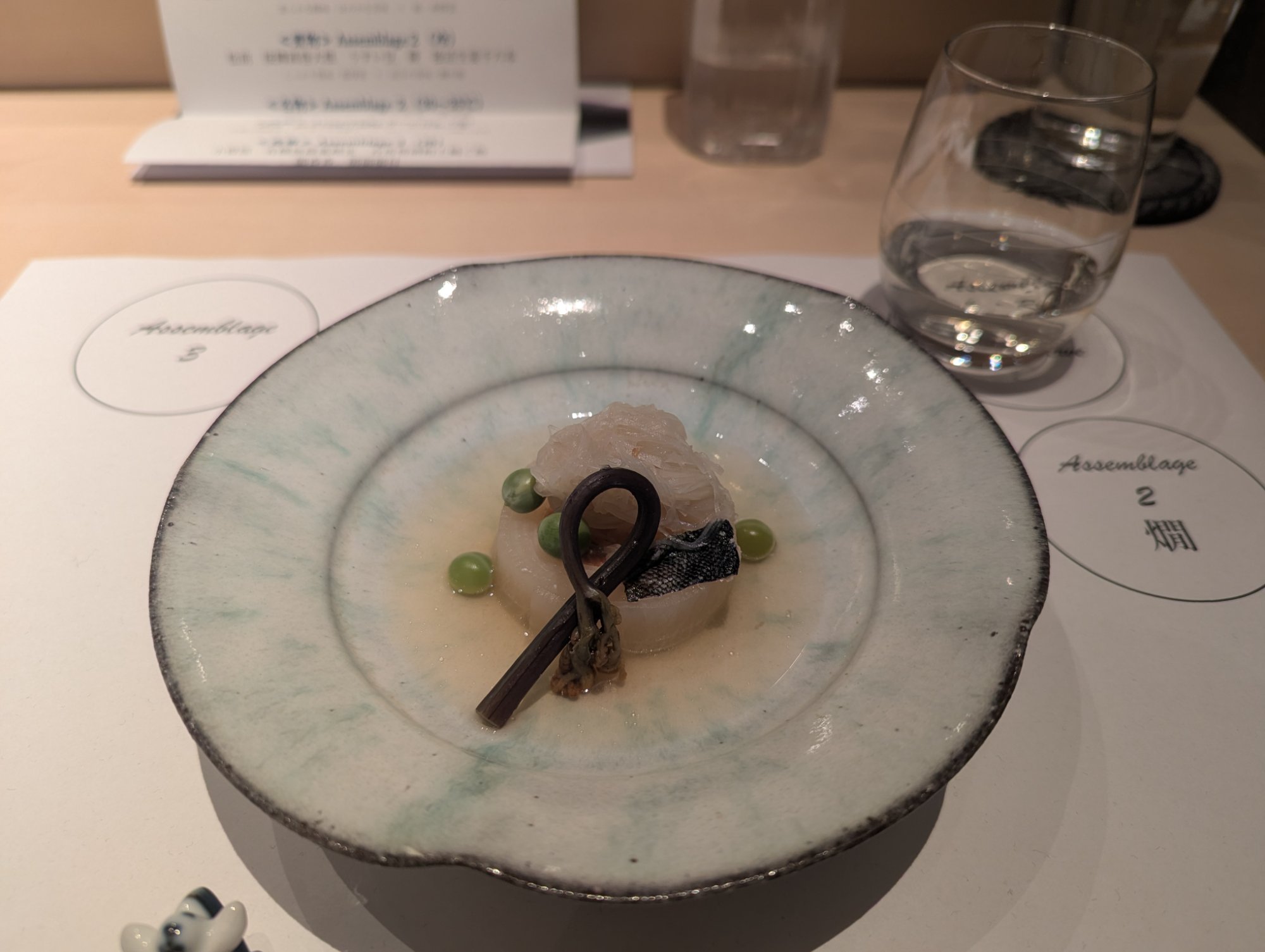
A masterwork of Japanese simmered cuisine. Cherry trout wrapped in a thin daikon spiral, with bracken, snap peas, and udo in a Matsumae kombu dashi. The north’s sea, held in a broth drawn with the north’s kelp.
Assemblage 2 cold — “strong maturity, density × dashi umami, trout fat.” The sake’s aged depth receives the fat of the trout and entwines with the dashi’s umami. The resonance between fat and umami creates a finish that extends long after the bowl is empty.
≪Meibuts≫ Assemblage 2 (30–35°C)
Taniguchi Farm — Furano wagyu — leaf burdock
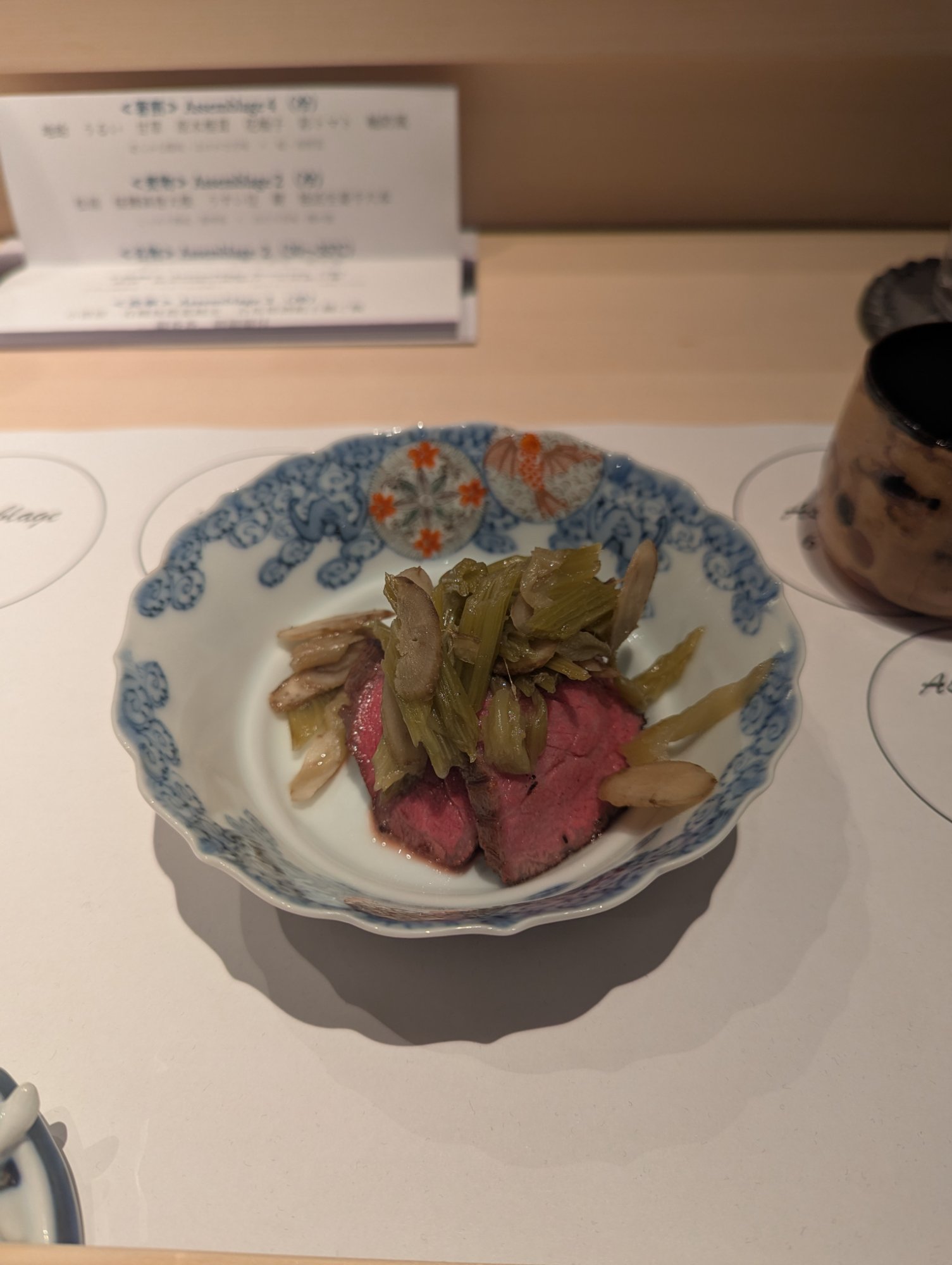
The evening’s “meibuts” — signature dish. Furano wagyu from Taniguchi Farm, paired with IWA Assemblage 2 at 30–35°C (hinatakan). The meat is a vivid, even pink; the leaf burdock’s bitterness counterpoints the fat.
The same Assemblage 2 — but warmed. The aromatics open; the sweetness and body increase; the sake climbs to the same level as the beef’s nuanced fat. This was the moment when IWA’s assemblage philosophy became tactile: multiple base sakes layered together, matching the wagyu’s own layered umami note for note.
≪Agemono≫ Assemblage Reserves (cold)
Karatsu higanfugu (globefish) — sansho-fried — wild butterbur blossom
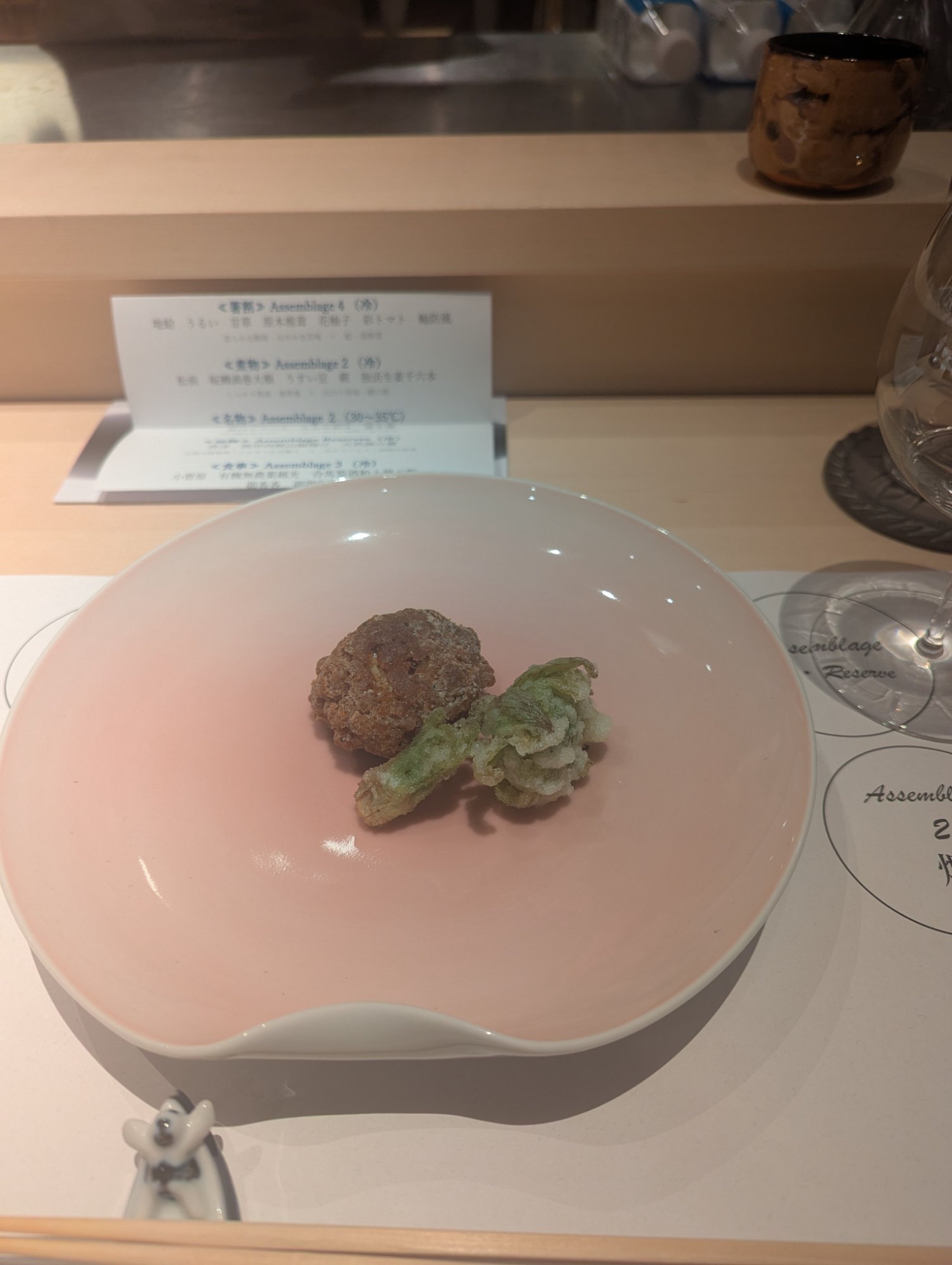
Higanfugu from Karatsu, fried in sansho pepper batter, alongside wild fuki-no-tou (butterbur blossom). The fried texture and the double bitterness of spring — a demanding pairing.
Assemblage Reserves is not commercially available. It is a non-sale expression — constructed from base sakes across multiple vintages, effectively an archive of IWA. Ancient complexity, silky texture. Its deep maturation holds the higanfugu’s delicacy within the sansho’s heat and the butterbur’s bitterness, drawing them into coherence rather than competition. The privilege of drinking something that exists in no store anywhere made the combination more acute.
≪Shokuji≫ Assemblage 3 (cold)
Kozohara organic Koshihikari — Ouma bamboo shoot, sake-kasu donabe rice — pickles — miso soup
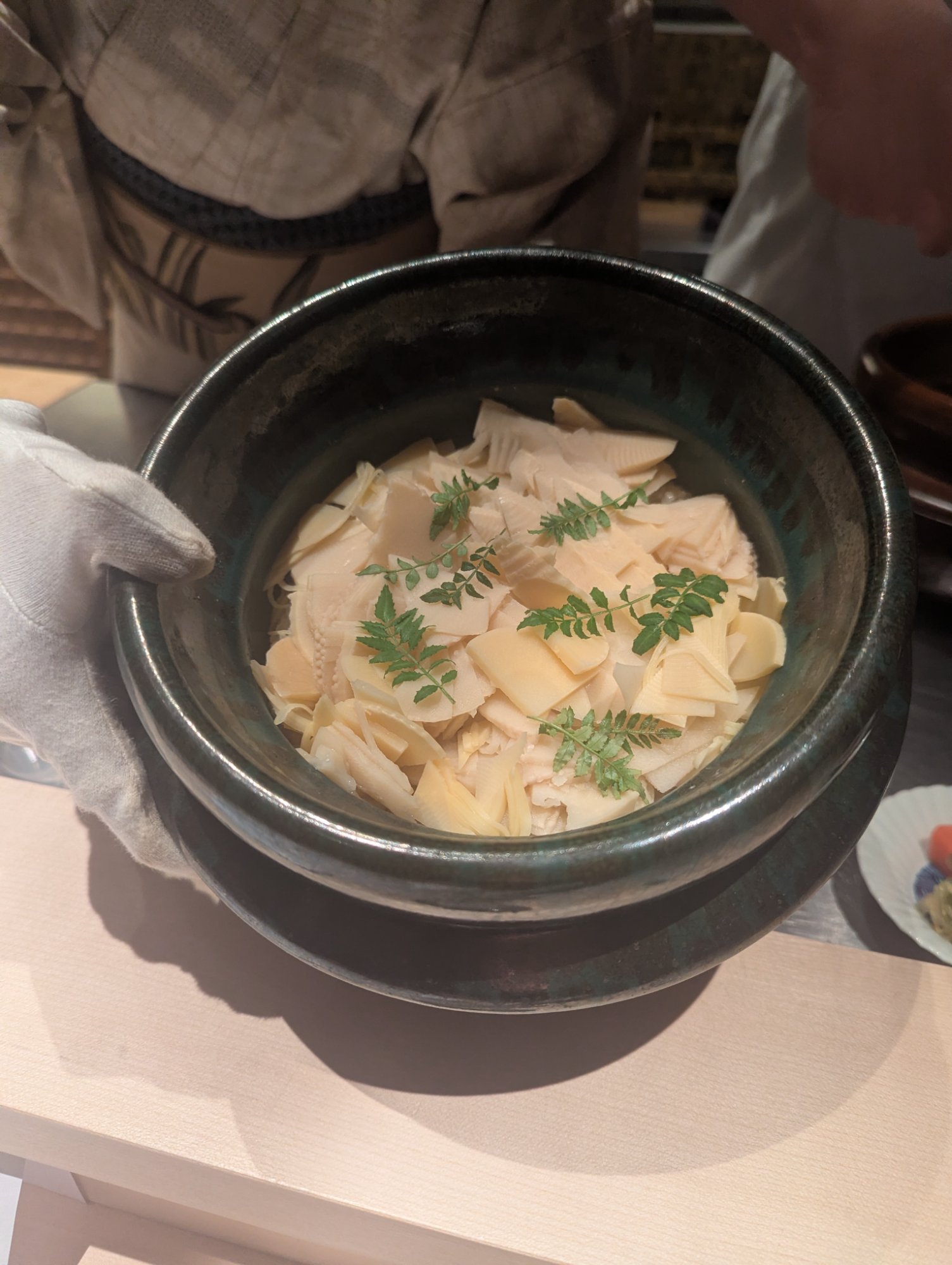
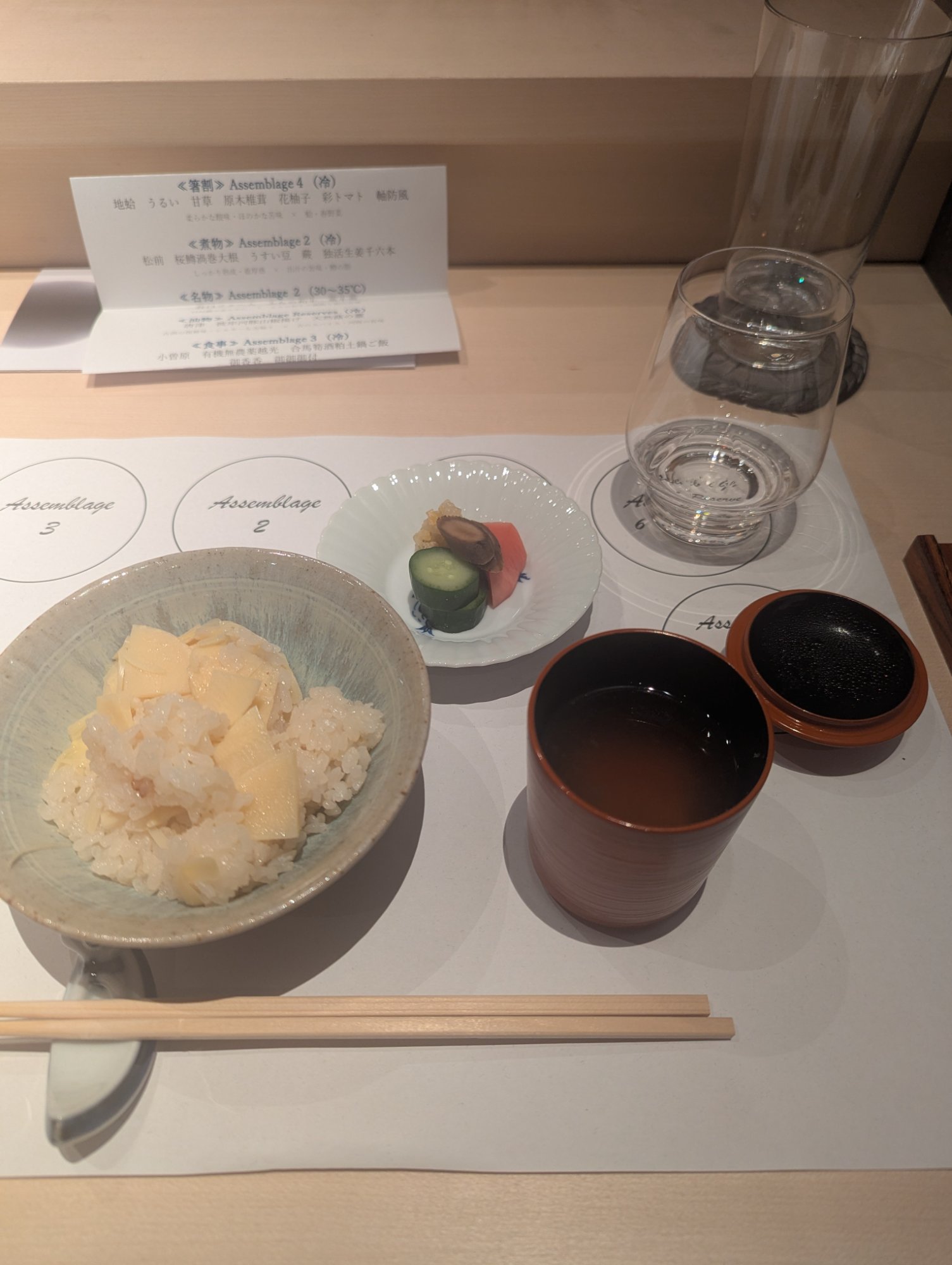
The finishing rice course: Kozohara organic Koshihikari with Ouma bamboo shoot, cooked in Shiraiwa Shuzo’s own sake-kasu in a donabe. The fermentation umami of the lees permeates the rice. Handmade pickles; hamaguri clam miso soup.
Assemblage 3 — “dry-sharp cold × sake-kasu and rice umami, bamboo fragrance.” A sake made with the lees of IWA, pairing with rice cooked in those same lees: not coincidence but intention. The circular logic of the pairing — rice becomes sake, sake-kasu returns to cook rice — was, in the end, this course’s deepest flavor.
≪Kashi≫ Matcha amazake (warm)
Sakura domyoji — green pea an — salt-pickled cherry blossom
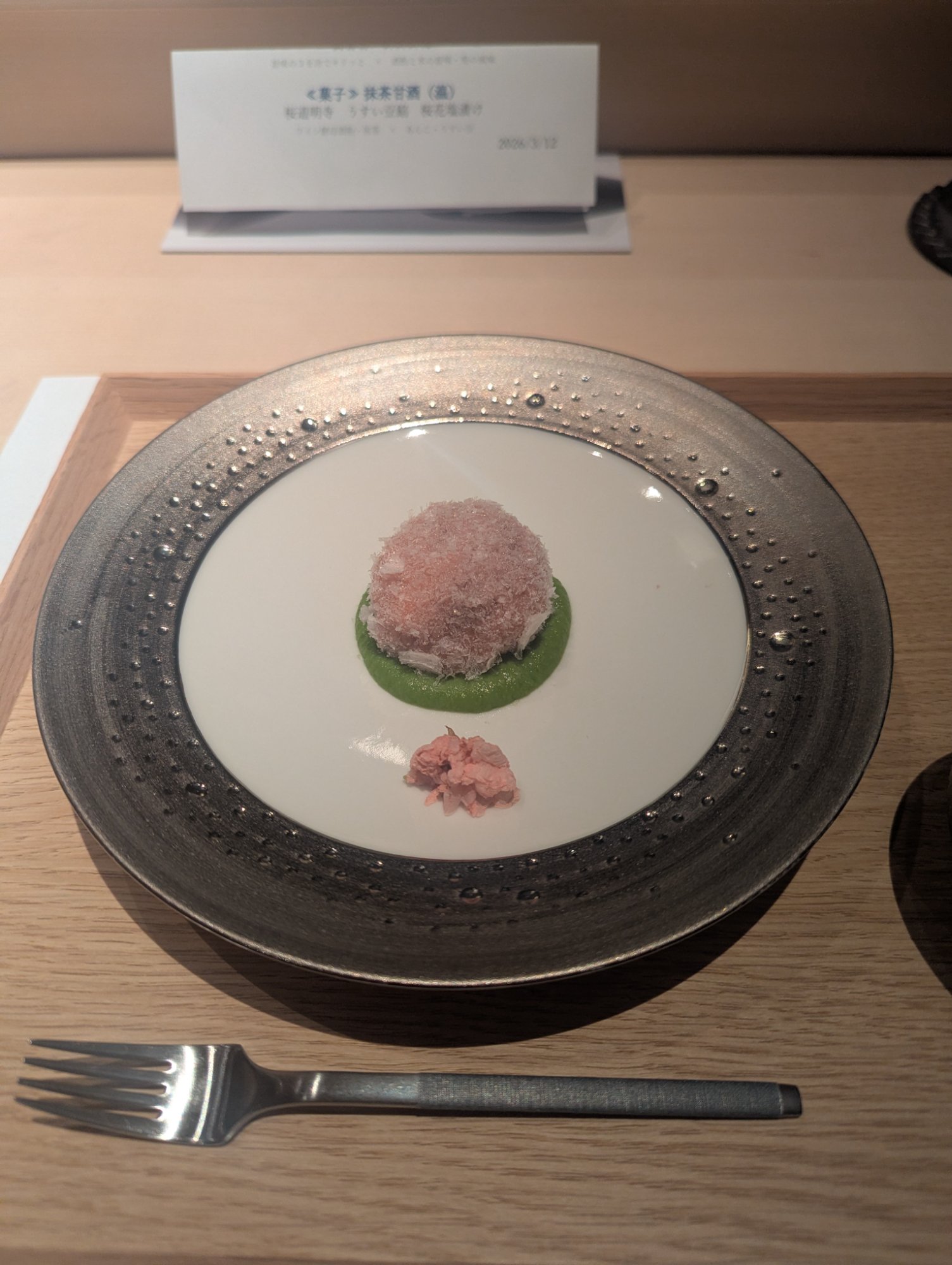
A warm matcha amazake made from wine-yeast sake-kasu. Sakura domyoji with green pea an and a pickled cherry flower: spring closed into two bites.
That the sake-kasu from IWA should appear not only in the donabe rice but in the dessert amazake — that Shiraiwa Shuzo’s fermentation should run through every course — was the evening’s quiet revelation. IWA designs not the sake alone but the table around it.
What This Evening Left Behind
IWA’s philosophy is assemblage: by layering precisely selected base sakes, reaching a complexity and harmony that no single sake could achieve. This is the technique of Champagne, translated into Japanese sake by someone who spent his working life mastering it.
Eigetsu’s cuisine works the same way: individual ingredients, carefully handled, layered so that the whole exceeds the parts. Crab and taihaku sesame oil, cherry trout and Matsumae dashi, Furano wagyu and leaf burdock — each element performing in relation to the others.
“Not merely sake, but a work of art made to resonate with time, space, and food” — the flyer’s words, read after eating, felt earned.
Second Maker’s Dinner “IWA × Eigetsu” held March 12, 2026. ¥35,000 per person (tax included), by reservation.
Shiraiwa Shuzo / IWA5: https://iwa-sake.jp/en/
Oryouri Eigetsu: https://www.oryouri-eigetsu.com/